
Sex Offender Checks in San Juan County
Utah Department of Public Safety's Bureau of Criminal Identification manages the Utah Sex, Kidnap, and Child Abuse Offender Registry. That state system is the public starting point for a San Juan County sex offender check by name or location. It publishes a limited statutory profile. It is not an index of all sex-offense cases, all people with such convictions, or all court events. Some juvenile-origin registrations are maintained but do not appear publicly. A blank result therefore does not prove that no duty exists.
Use the local office for registration logistics or a report of suspected noncompliance. The San Juan County Sheriff's Office serves residents outside Blanding. Blanding residents should confirm the correct process with Blanding Police. For an urgent threat, call 911. For a case disposition, use the court file rather than the registry because the profile is built for public notification, not for reconstructing prosecution.
Note: A published address is the location reported to the registry, not proof that a person is physically present when searched.
San Juan County Registry Gateway
The BCI offender-registry landing page identifies the official Utah programs and sends users to the public gateway. The captured BCI page below helps distinguish the government registry from look-alike search services.
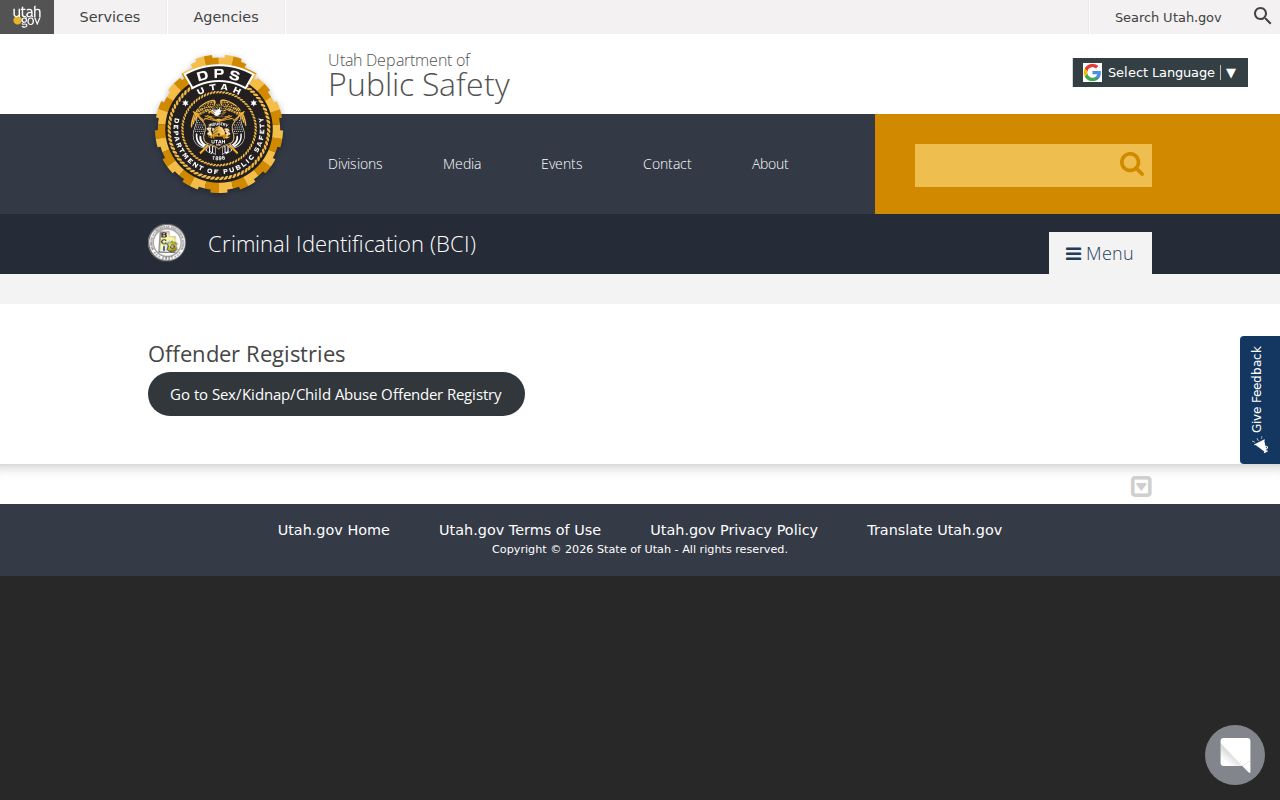
This state landing page is the safer route when bookmarks or search results make the official portal hard to identify. The live gateway requires acceptance of a statutory disclaimer before its controls load. During research, those JavaScript controls could not be fully validated, so users should read the live labels rather than assume a fixed radius or dropdown option.
Official scope: The registry is managed by Utah DPS/BCI under Title 53, Chapter 29 and displays only the fields Utah law makes public.
How to Search the Utah Registry
Begin at the Utah public offender registry gateway. Read and accept its terms, then choose the live search method that fits what is known. Exact controls can change, but Utah law and the inspected interface support name, geographic or address-based searching, surname and postal-code indexing, map or list presentation, and a separate online-identifier function.
- Open the official gateway and read the accuracy and lawful-use disclaimer.
- Search a name and any known alias, or use the available place and address controls.
- Compare the public identity fields before treating a result as the right person.
- Open the full profile, note its reported address and offenses, then contact BCI if data conflict.
| Search field | Type | Required | Use |
|---|---|---|---|
| Offender name | Text | Varies | Try spelling changes and aliases where allowed. |
| Address or geography | Location | No | Search a known place using current live controls. |
| Surname or postal code | Index | No | Browse the public index required by Utah law. |
| Map or list | Display | No | Review results in the formats offered by the portal. |
| Telephone or online ID | Special lookup | Input needed | Returns only whether the identifier is linked to an offender. |
San Juan County Registry Offices
Registration is an in-person duty. While under supervision, a person registers through Utah Department of Corrections Adult Probation and Parole. Otherwise, the police or sheriff for the proper jurisdiction handles it. For San Juan County registry questions outside Blanding, call the Sheriff's Office at 297 South Main Street in Monticello, 435-587-2237. Blanding residents should call Blanding Police at 167 East 500 North, 435-678-2334. Research found no local appointment or fee schedule, so confirm both before visiting.
San Juan County Sheriff
297 South Main Street
Monticello, UT 84535
435-587-2237
Blanding Police
167 East 500 North
Blanding, UT 84511
435-678-2334
These San Juan County registry offices handle local compliance and registration tasks. They do not replace the public portal for a general San Juan County sex offender search, and they do not issue court dispositions. Name the purpose of the call so staff can route it correctly.
Inside a Registry Profile
Utah law defines each public San Juan County registry profile. The entry can join identity details, reported homes, vehicles, a current photograph, qualifying offenses, and selected state identifiers. Victim information is redacted. Public online identifiers are also excluded from the ordinary profile, even though a special identifier search may confirm whether a telephone number or online account is linked to an offender.
| Name and aliases | Published identity names used to distinguish records. |
|---|---|
| Physical details | Date of birth, height, weight, eye and hair color, plus a current photograph. |
| Reported residences | Primary, secondary, and temporary residence addresses on file. |
| Vehicles | Make, model, color, year, and plate information. |
| Public activities | Utah schools tied to work or enrollment, volunteer places, and professional licenses. |
| Registration basis | Registrable convictions or adjudications and DPS-selected identifiers. |
The legislature's current offender-registry chapter is shown in the official image below. It is the controlling source for public fields and registration duties.
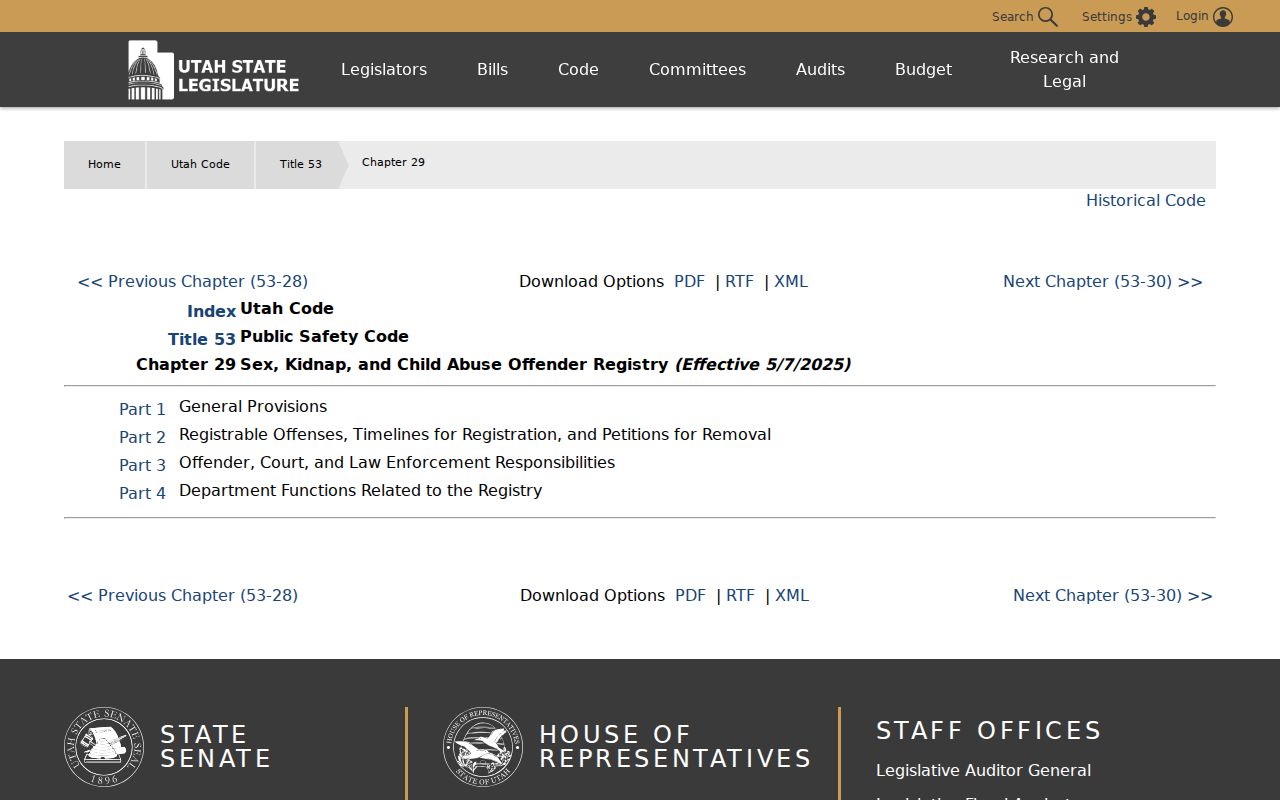
The statute also explains why a profile should not be expanded by guesswork. What is absent may be protected, withheld by design, or outside the registry's scope.
San Juan County Registry Across States
People do not always remain in one state, and San Juan County includes jurisdictional edges near tribal and federal land. The National Sex Offender Public Website provides the official cross-state layer for a San Juan County offender search. The captured national interface below shows where to repeat a search when the relevant state is uncertain.
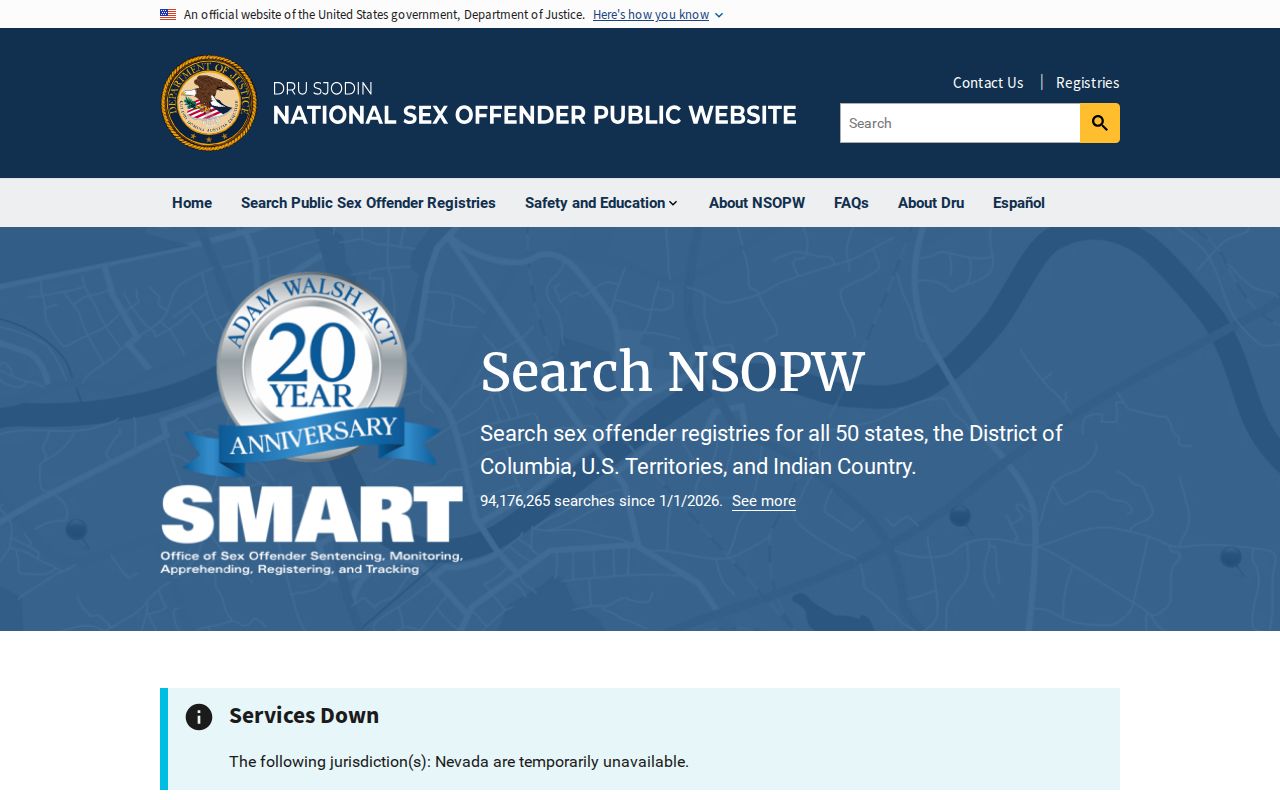
NSOPW gathers public information from participating jurisdictions, but it does not replace Utah's source record. If the national and Utah displays differ, contact BCI and avoid selecting whichever value seems more alarming. A state entry may update on a different schedule, and each jurisdiction decides what its law makes public.
A broad search also raises the risk of a false match. Compare aliases, birth data, physical details, photographs, and offense information. Never rely on a name alone. The registry's own disclaimer says its information comes from offenders and that DPS cannot guarantee complete accuracy.
Utah Registration Levels and Requirements
Utah uses offense-based duration tracks, not public risk tiers. Under Section 53-29-203, listed offenses generally require registration for ten years after the sentence ends or for life. Some under-21, no-force findings can reduce a lifetime term to ten years, and the law provides limited petition routes. The exact offense, sentence-termination date, out-of-state rule, court finding, and later petition can all affect the result.
| Utah track | General duration | Routine update cycle |
|---|---|---|
| Ten-year offenses | Ten years after sentence termination | Birth month and sixth month, plus required changes |
| Lifetime offenses | Life unless a specific legal reduction or removal applies | Birth month and sixth month, plus required changes |
Do not translate these tracks into SORNA Tier I, II, or III labels. Utah's public system does not use those as its profile scheme. When duration matters, read the exact conviction and statute, then seek qualified legal help rather than deciding from the search page.
San Juan County Registry Update Schedule
The San Juan County registration schedule follows Utah's routine cycle: in-person registration during the person's birth month and again during the sixth month after it. Certain changes require faster action. A new residence, job, vehicle, school connection, or other covered fact generally must be updated within three business days. The responsible office depends on supervision and location, which is why a Blanding resident and a resident elsewhere in San Juan County may start with different agencies.
The public image of Utah's criminal-history dissemination law provides useful context. Review Utah Code Section 53-10-108 before treating a registry entry as a full criminal-history report.
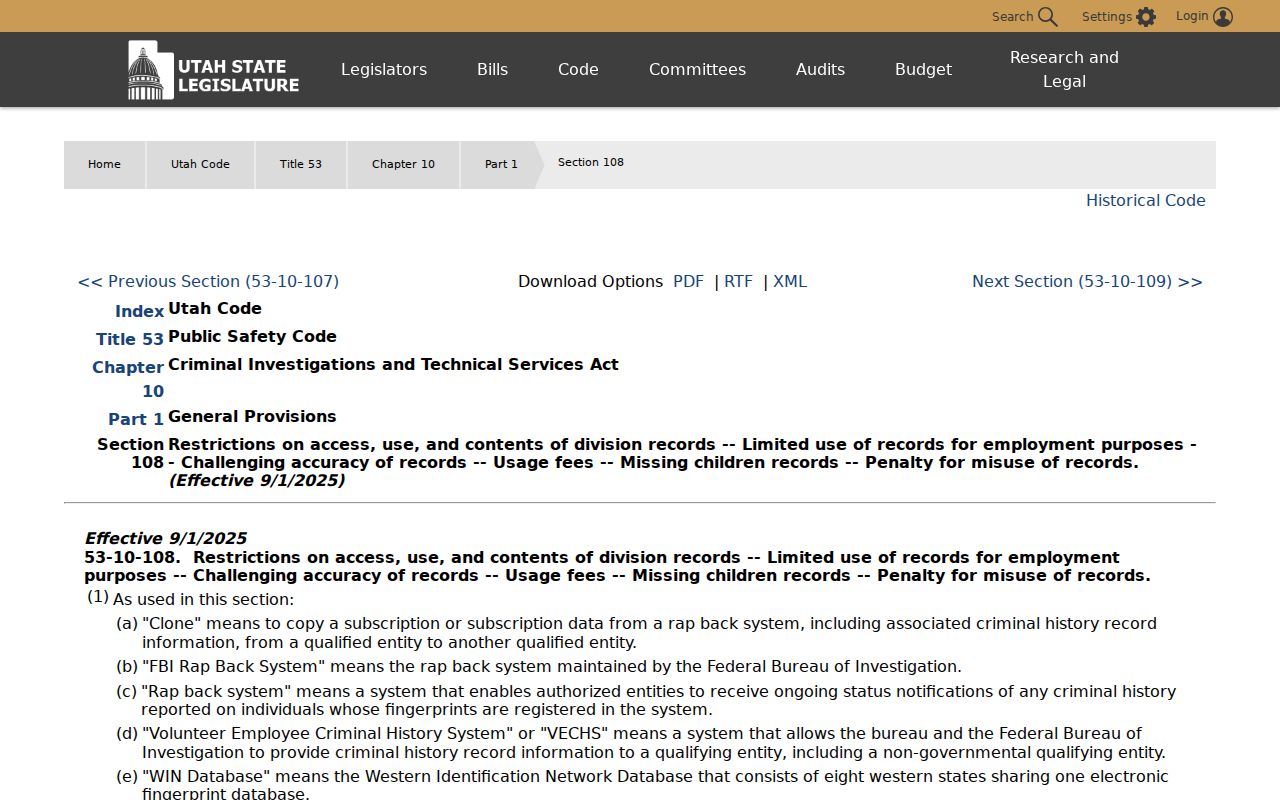
The registry is one narrow public exception within a wider system of controlled criminal-history dissemination. BCI does not offer the public a general name search of another person's statewide rap sheet.
Note: A missed public update may reflect timing, data review, or noncompliance; report a concern to the proper agency instead of confronting anyone.
Community Notification and Lawful Use
Registry data supports safety planning and community awareness. Use it to understand the public facts, confirm a match, and choose calm precautions. It does not authorize surveillance, threats, public shaming, or contact with a listed person or family. The state portal places this warning before the search because misuse can create harm and may be a crime.
Do not confront or harass: Utah's registry warning and Title 53, Chapter 29 govern registry use; never harass, threaten, stalk, or harm registrants or their families.
Public status does not guarantee that every detail is current. Confirm conflicts with BCI, and use the local registration office for procedural questions. A court clerk remains the source for the actual case outcome. Registry data should never be treated as a substitute for a certified judgment.
Report San Juan County Registry Noncompliance
Suspected noncompliance belongs with the agency that registers the person. Call the San Juan County Sheriff's Office for county-served locations or Blanding Police for matters within Blanding. Explain the observed issue without embellishment. Provide the profile name, relevant address or identifier, time, and what appears inconsistent. In an emergency, use 911.
The special telephone and online-identifier lookup protects identity in a deliberate way. It answers only whether the submitted identifier is linked to an offender. It does not reveal who the offender is through that query and does not by itself establish a crime. Report the result and let investigators assess it.
Utah also has no simple, universal residence-radius rule for every registrant. Presence and conduct restrictions depend on the right statute and facts. Avoid claiming a violation based only on distance from a school, park, or other place. The jurisdictional agency can determine which provision applies.