
Checking Criminal History in San Juan County
San Juan County has no one-stop criminal history portal. Utah Courts XChange is the broad public index for filed District Court and Justice Court cases, while clerks can help with an older file or a record that lacks electronic documents. A recent arrest may not appear there yet. In that situation, the San Juan County Jail can confirm current custody, and the arresting agency remains the source for its own report. BCI serves a different role: it gives a person access to their own fingerprint-linked Utah history.
Gather the full name, birth date when known, old names, spelling variants, likely court, event date, and agency before searching. These details matter because a case number is not unique statewide and because one event can carry separate police, jail, court, and state identifiers. Follow the trail in this order:
- Search XChange across both District and Justice Court, then narrow the scope to San Juan County or a named local court.
- Use the birth date and a last-name wildcard when common names, suffixes, or middle initials make the result list unclear.
- Call the proper clerk to confirm the charge-level outcome and ask about files that are older, converted, or not sold online.
- For recent custody, call the jail. For the report narrative, contact the agency that made the arrest and use its GRAMA route.
- For your own statewide Utah history, submit the identity-controlled BCI application and compare it with each court disposition.
For the court side of that trail, the full San Juan County criminal court case process explains how filed charges, pleas, and outcomes differ from jail intake data.
San Juan County Criminal Record Custodians
The Public Safety Building at 297 South Main Street in Monticello makes access look simpler than it is. The Sheriff, jail, District Court, Justice Court, County Attorney, and adult supervision functions operate at or around the same complex. They do not share one public file. Court clerks control case records. The Sheriff controls law-enforcement and jail material. The County Attorney prosecutes cases but is not the general copy counter.
The San Juan County government directory shows the county offices that route local requests.
That county entry point is useful for finding a department, but the record should still be requested from the office that created it. The access path is best viewed as a chain:
| Question | First custodian | Fallback |
|---|---|---|
| What did an officer report? | Arresting agency | Agency GRAMA request |
| Is the person in county custody? | San Juan County Jail | Sheriff phone or lobby |
| Were charges filed and resolved? | District or Justice Court clerk | XChange or court-record request |
| What is on my Utah history? | Utah BCI | Right of Access by mail or in person |
| Is state custody or supervision current? | Utah Department of Corrections | Offender Search and agency confirmation |
Utah Official Background Checks
The Utah Department of Public Safety Bureau of Criminal Identification is the central repository. It does not offer a public name search for another person. BCI Right of Access lets a person order their own Utah criminal history in person or by mail for $20. The request requires government photo identification and identity details. A Third Party Release can send the subject's result to a chosen recipient, but it does not open the repository to public searching. BCI does not keep juvenile offender records.
The BCI own-history instructions show the subject-controlled application route.
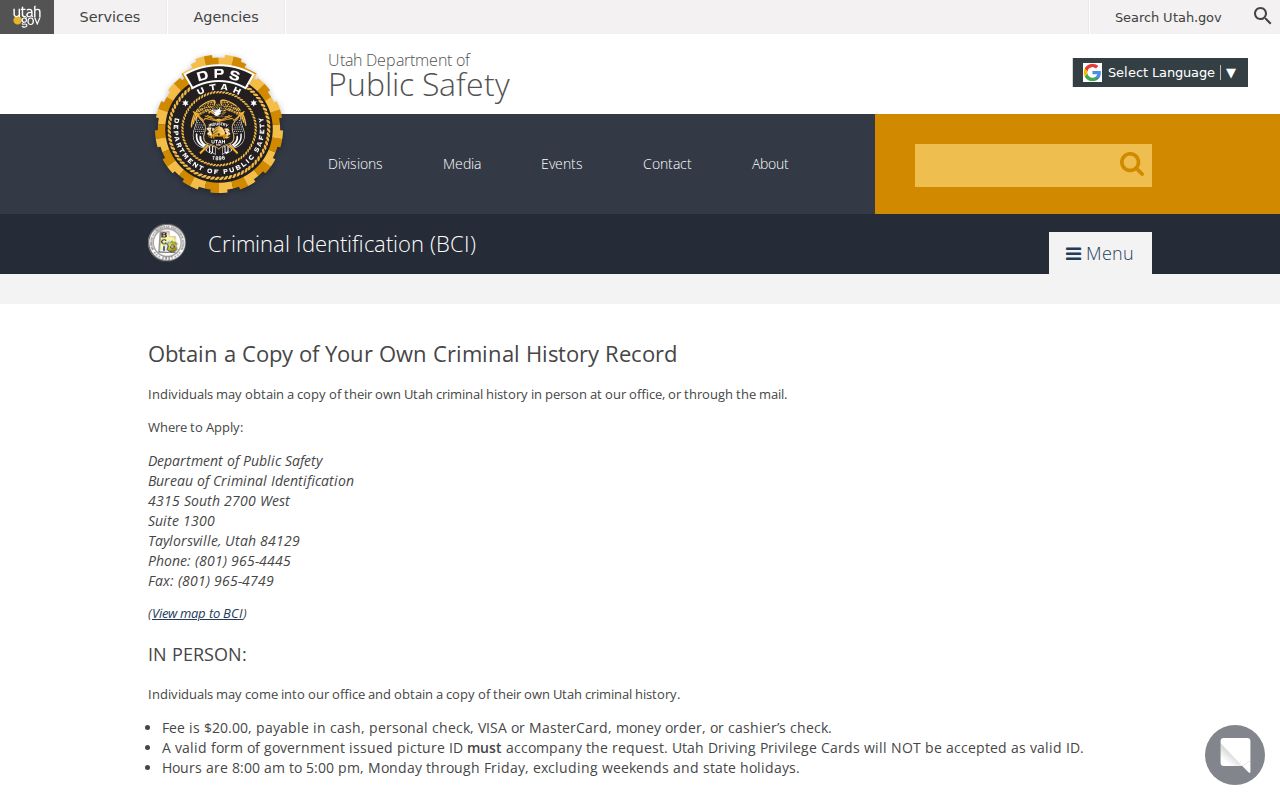
The finished Utah report is mailed, not faxed or emailed. BCI's challenge process is the next step if a person finds an inaccurate or missing entry. A nationwide self-review instead runs through the FBI Identity History Summary process and uses a separate fingerprint submission.
XChange and BCI Criminal Records
XChange is case-centered. It can show the court, caption, case number, charges, plea, disposition, judge, parties, proceedings, account entries, and available documents. BCI is identity-centered and compiles fingerprint-supported Utah arrest cycles and reported outcomes. A San Juan County XChange list is therefore not the same thing as a Utah rap sheet. Neither is a live county-jail roster, which the Sheriff does not publish.
The XChange form rewards a careful first search because every search click can carry a charge and results stop at 500. A wildcard after the start of a surname can catch variants. Birth date is useful when two people share a name.
| Field | Use in a San Juan County search | Key limit |
|---|---|---|
| Jurisdiction | Select District Court, Justice Court, or both | Court level changes with the charge class |
| Last Name or Company | Enter a name and use an asterisk for variants | Exact spelling can miss a record |
| Birth Date | Narrow common defendant names | Optional and not present in all contexts |
| Search Scope | Choose San Juan County or a particular court | A narrow court can omit another filing level |
| Date Range | Filter by filing, disposition, or judgment dates | The chosen date type changes the result |
One-time or guest access starts with $10; current searches cost $0.35 and documents cost $1. A created one-time account keeps unused credit, while a guest session does not. Monthly service has a $25 setup fee and a $40 monthly fee, with 500 searches included. Public terminals are free at most district courthouses, though local availability should be confirmed.
Criminal Record Types
A criminal event creates records at different stages. The responding agency writes an incident or arrest report. San Juan County Jail makes the booking record. A prosecutor may then file a complaint or information, which starts a court case. Fingerprints and later dispositions may reach BCI. Current state custody or supervision may appear through UDC, while the Utah registry publishes only the fields selected by law.
Keep the source and purpose of each record clear. The BCI fingerprint service information also shows how the identity-based state route begins.
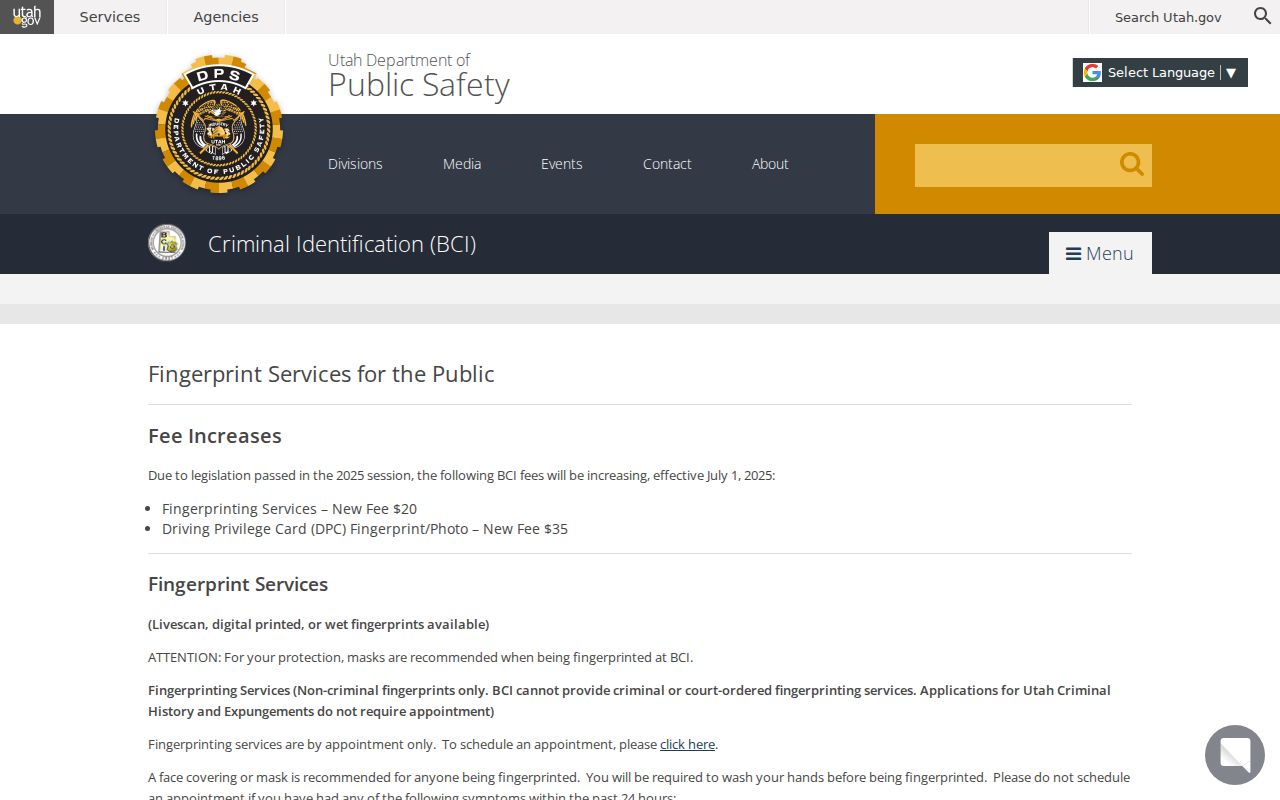
The state service supports Livescan, digitally printed cards, and wet prints by appointment, while the county Sheriff separately advertises local fingerprint payments.
- Booking record
- Jail intake data, photograph, fingerprints, booking charges, bail, and release status. It proves custody, not guilt.
- Court docket
- The dated list of filings, hearings, pleas, rulings, and other case events held by the clerk.
- Disposition
- The outcome of the case or of one charge, such as conviction, acquittal, or dismissal.
- BCI history
- A fingerprint-linked Utah repository record available through the subject's official self-review process.
- Expungement
- Utah's process for sealing qualifying government records from ordinary access.
Warrants also need direct confirmation. San Juan County publishes no warrant list, Most Wanted page, or app-based lookup. XChange may reveal a related court event, but the issuing court or Sheriff should confirm whether a warrant is still active.
San Juan County Jail Record Calls
No official county inmate roster, daily booking log, arrest blotter, or mugshot gallery was found. The reliable first move for recent custody is a call to San Juan County Jail at 435-587-2237. Ask whether the person is in custody and what public booking details can be given. The jail's average population of 90 is not a live count and is not its rated capacity.
A booking begins with identity intake, a photograph, and fingerprints. The officer submits probable cause, and the Sheriff says a judge has 24 hours to review that statement and set bail. This can happen before a court case is easy to find. If XChange has no result, do not treat the silence as proof that no arrest occurred. Call the jail, identify the arresting agency, and check the correct court again after filing time.
UDC Offender Search begins to help only when a person is in state custody or under UDC probation or parole. It does not cover every pretrial detainee at the county jail. The local San Juan County arrest lookup routes separate jail confirmation, agency reports, court filings, and state supervision.
Note: A booking charge can change after prosecutor review, so the court disposition remains the best source for the final outcome.
Inside a San Juan County Criminal Record
The fields depend on who made the record. A BCI history connects identity data and fingerprints to arrest cycles and reported outcomes. XChange organizes information by case. A booking file centers on the custody event. Gaps can result from timing, aliases, incomplete reports, or identifiers that did not match, so a difference between systems is a reason to trace the source rather than assume one file is false.
| Name and Identifiers | Current name, aliases, birth data, agency numbers, and fingerprint-linked state identifiers where authorized. |
|---|---|
| Arrest and Booking | Arresting agency, intake time, photograph, fingerprints, booking charges, bail, release, and jail identifiers. |
| Charges and Statutes | Descriptions, offense levels, cited law, filing court, and prosecutor-filed allegations. |
| Plea and Disposition | The response to each charge and its outcome, which may differ from the initial arrest allegation. |
| Sentence and Finance | Custody or supervision terms, fines, fees, restitution, payments, balances, and due amounts when public. |
| Custody or Supervision | Current UDC location or status, Board dates, and related dates within the agency's public scope. |
Read charge rows one by one. A case can contain a dismissed charge beside a conviction, and the first two case-number digits generally show the filing year rather than a statewide unique identity. Sealed, expunged, juvenile, and other nonpublic cases do not appear in the public XChange view.
San Juan County GRAMA Record Requests
The Sheriff has no separately branded records portal. Its Accident and Crime Reports route uses the county GRAMA application. Send a request to the San Juan County Sheriff's Office, PO Box 788, Monticello, Utah 84535, or begin at the physical counter at 297 South Main. The published phone is 435-587-2237, and the listed records contact is klee@sanjuancountyut.gov. The official material does not promise a flat fee, fixed turnaround, fax delivery, or walk-in service without checking first.
A focused request names the agency, date and place of the event, case number if known, people involved, and the exact file or format sought. Ask separately for the incident narrative, booking information, CAD or 911 material, photographs, and body-camera video because each can have a different classification. The Sheriff keeps body-camera recordings for at least 180 days, but the custodian still reviews release and may redact protected material.
Active investigations, juvenile data, victim identifiers, medical facts, and protected personal details may be withheld. Cash for certain sheriff transactions is accepted through the Clerk's Office at 117 South Main. Credit or debit payment runs through the Sheriff payment route after the office assesses the charge.
Public Access Laws in Utah
Public access depends on the channel. Utah GRAMA starts with a right to inspect public government records and obtain copies, subject to legal classification and fees. Court rules divide public material from private, protected, sealed, and expunged records. BCI dissemination law explains why the public cannot run an open name search for another person's statewide rap sheet.
Key Utah laws:
Utah Code § 63G-2-201 gives the public-access baseline for government records.
Utah Code § 53-10-108 limits criminal-history and warrant dissemination and provides a challenge route.
Utah court access rules identify private, protected, sealed, and expunged case material.
Utah Code § 77-40a-403 generally bars disclosure of an expunged record except through narrow authorized access.
Public status does not guarantee that every detail will be released. The custodian classifies local reports and applies redactions. Court staff control the public case file. A final disposition should be verified with the court that entered it, especially when the first record found is an arrest or booking entry.
San Juan County Criminal Record Jurisdictions
San Juan County covers 7,819.8 square miles, and almost half its residents identify as American Indian or Alaska Native alone. County, city, state, tribal, and federal authority can overlap across a landscape tied together by US-191. A record from an event near Bluff may sit with the Sheriff, a Navajo Police district, a federal agency, or a court outside the city structure. Location alone does not identify the custodian.
The federal Southern Region court page identifies the federal layer that includes San Juan County.
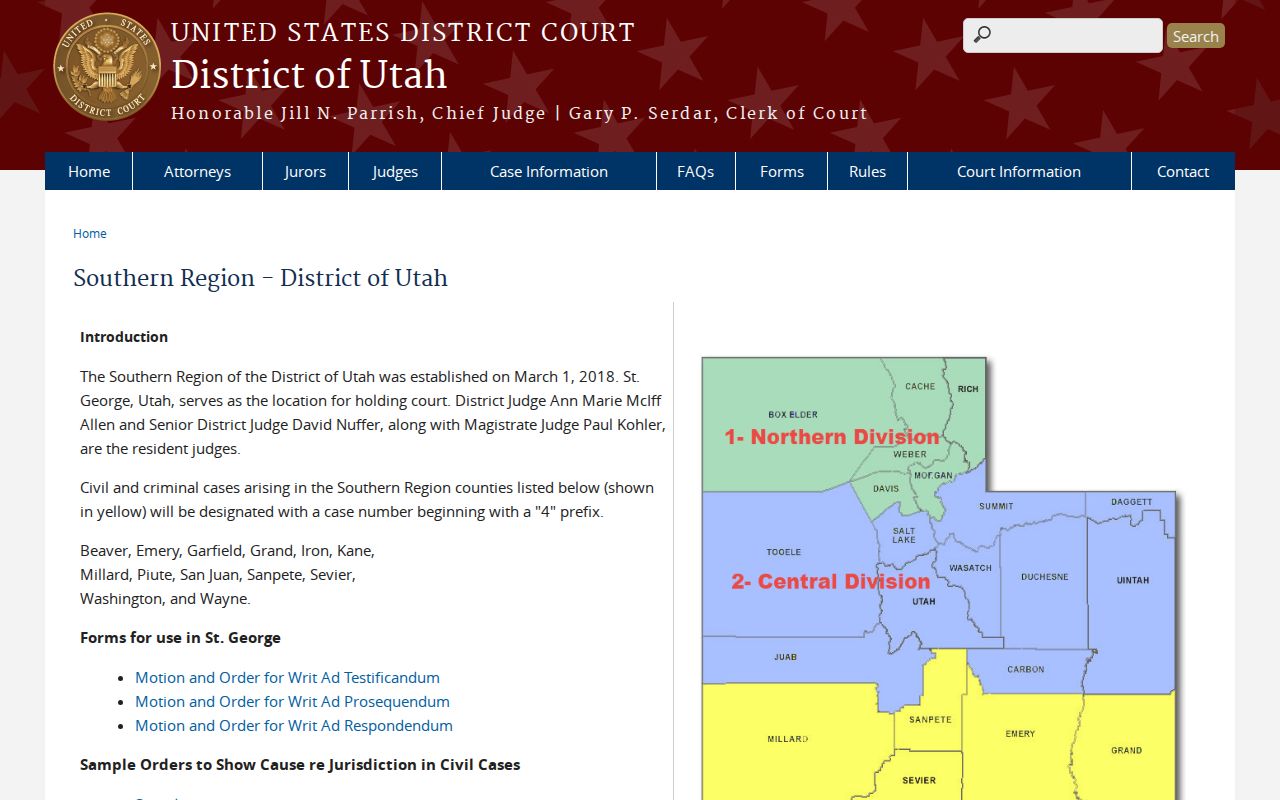
Federal cases use their own court system, and federal imprisonment appears through the Bureau of Prisons rather than San Juan County Jail or UDC. Tribal police records also stay with their sovereign agency. The practical rule is simple: ask who responded, obtain that agency's report number, then ask which court received the referral.
Sealed, Expunged, and Restricted Records
Utah expungement seals qualifying government case records from ordinary view. Government offices generally respond as though the event did not occur, subject to narrow lawful access. It does not erase news reports or force a nongovernment publisher to remove old material. Juvenile cases, victim-identifying facts, medical records, protected personal data, and matters sealed by court order also fall outside routine public access.
Petition cases require close checks of completion, paid obligations, pending cases, current custody or supervision, protective orders, offense limits, and waiting periods. The ordinary path begins with a $65 BCI certificate of eligibility, which is valid for 180 days. The person then files the certificate, petition, and proposed order in the deciding court. A never-filed arrest is filed in the district court for the place of arrest. Court filing fees effective May 6, 2026 are $150 in District Court or $135 in Justice Court, and a waiver may be requested.
After an order, ask for certified copies within the court's stated time and verify the change. An eligible personal case in MyCase should say "Case Expunged," while the public XChange case should disappear. BCI also offers a $15 verification that lists automatic and petitioned expungements.
2026 San Juan County Criminal Record Changes
Utah's automatic expungement process changed on January 1, 2026. Courts now identify qualifying automatic cases without a request form. Systems run monthly, and processing may take up to 120 days. The listed potential waits include seven years for a qualifying Class A drug-possession case, six years for a qualifying Class B misdemeanor, and five years for a qualifying Class C misdemeanor, infraction, or minor regulatory offense, with financial duties paid.
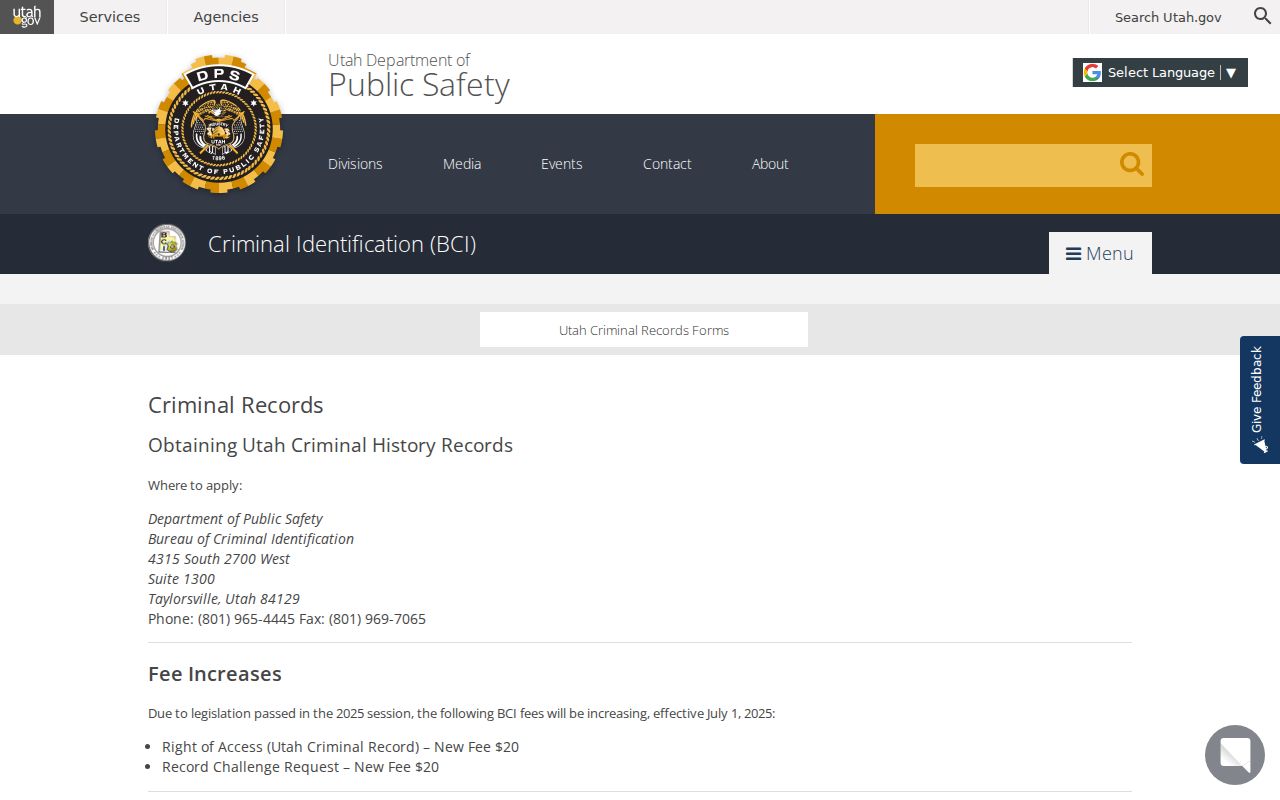
The BCI criminal-records office is the state source for self-review, challenges, certificates, and current fee notices.
Automatic processing does not make every old case eligible. Offense exclusions, unpaid balances, later cases, and record reporting can affect the result. Check MyCase for an eligible personal file and XChange for the public view. If a disposition is wrong, secure the court record before using the BCI challenge process.
San Juan County Criminal Data Context
Official Utah crime dashboards use agency-reported UCR and NIBRS data. Since 2021, missing values can reflect nonreporting rather than zero crime. That warning matters in San Juan County because Monticello routes law enforcement to the Sheriff and Bluff has no police department. Blanding's council packets offer more local detail, but their monthly calls, citations, charges, and violations use different units and should not be added as though they are all criminal cases.
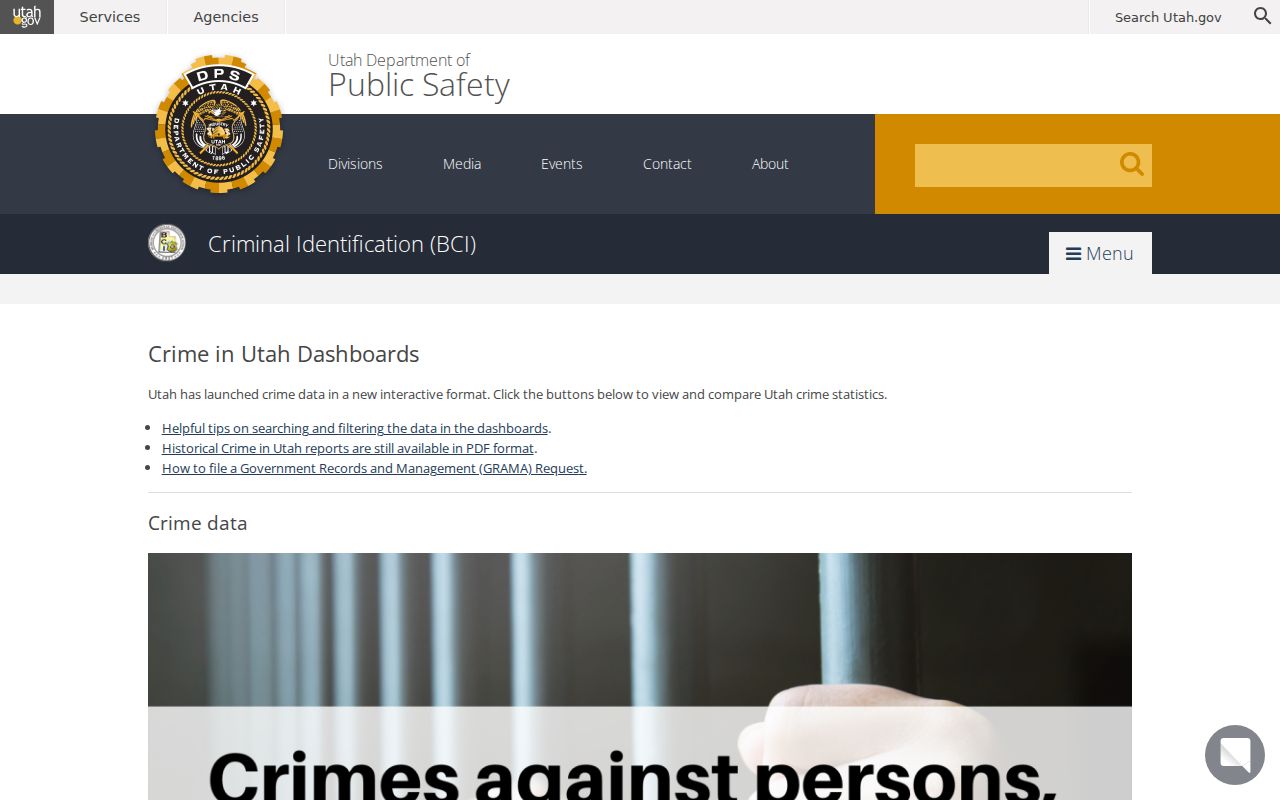
The Utah Crime in Utah dashboards provide the official statewide reporting context.
Use the reporting agency and geographic label shown by the source. A county figure is not a Bluff crime rate, and one month of Blanding police work is not an annual trend. The same care applies to Seventh Judicial District caseload figures, which cover Carbon, Emery, Grand, and San Juan counties rather than San Juan County alone.
These agency limits make phone and counter fallbacks vital. San Juan County residents should confirm the reporting office, the record's real geographic label, and the most direct access channel before drawing conclusions from a blank dashboard cell.
San Juan County Criminal Records by City
San Juan County has exactly three incorporated places. Their record paths differ sharply. Blanding maintains an independent police department and a city Justice Court. Monticello routes police service to the Sheriff while its city recorder handles city-created records. Bluff has no municipal police department, jail, or court, so a reader must sort county, tribal, state, or federal jurisdiction before requesting a file.
Blanding Criminal Records
Population 3,216 · Independent police and a city Justice Court at 167 East 500 North.
Monticello Criminal Records
Population 1,757 · Sheriff-served law enforcement with city and county court routes.
Bluff Criminal Records
Population 250 · No town police, jail, or court; county and tribal routing matters.
These San Juan County record routes explain why a broad place-name search can fail. Start with the agency that responded, then follow custody to the jail and prosecution to the proper court.